AI / neuroscience
Meta TRIBE v2: what is it and what can you do with it?
Meta, the company behind Facebook, Instagram and WhatsApp, introduced TRIBE v2 in 2026 as a research model developed by the AI at Meta team.
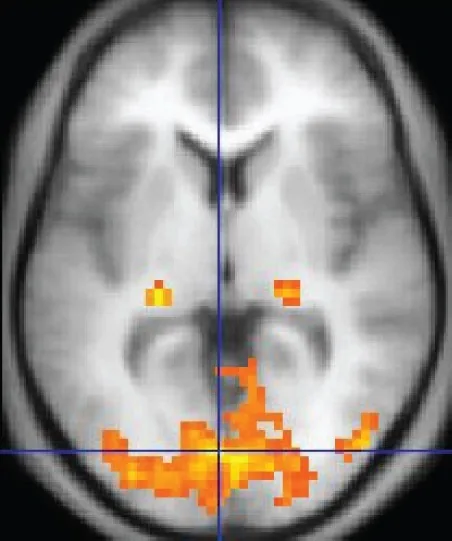
At a high level, TRIBE v2 takes a stimulus - for example a video clip, an audio recording or language - and predicts an fMRI response pattern on the cortical surface. The public implementation predicts the response of an “average” subject by default rather than creating a digital copy of a particular person.
That distinction matters. Meta uses “digital twin” language in its launch materials, but TRIBE v2 is not a digital mind, does not know your memories and does not know what you are thinking.

How does TRIBE v2 work?
Imagine watching a car driving through the mountains. Your brain is processing motion, scenery, sound, speech and the meaning of what is happening on screen at the same time.
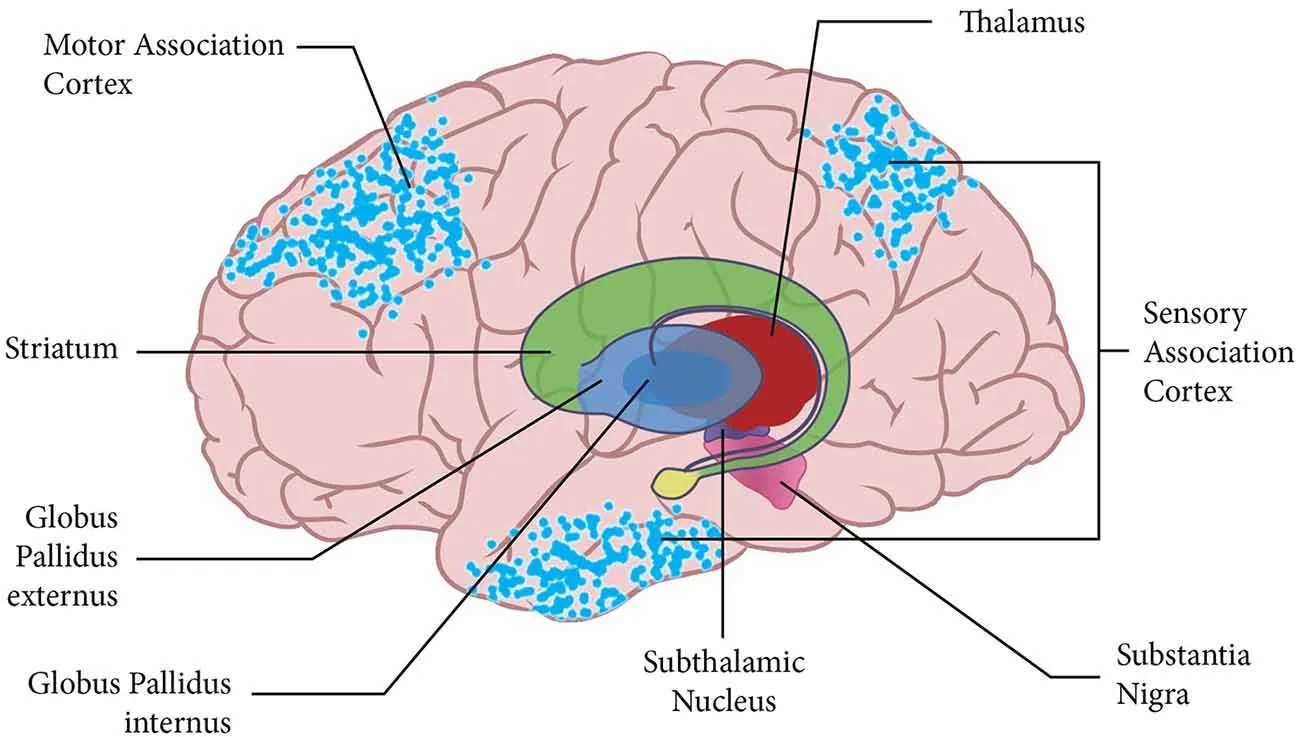
TRIBE v2 tries to predict the fMRI response associated with that stimulus. It is not observing your brain live. It receives media as input and, using relationships learned from research data, generates a predicted pattern of activity on a cortical mesh.
The architecture combines three specialized foundation models: V-JEPA2 for video, Wav2Vec-BERT for audio and LLaMA 3.2 for language. Their representations are fused by a Transformer that maps them to predicted fMRI responses.
How to use TRIBE v2
The quickest way to test TRIBE v2 is to start with Meta’s official repository and pretrained model. The repository includes setup instructions and a demo notebook, so you can run the model without training it from scratch.
TRIBE v2 predicts brain responses to audiovisual stimuli. It does not measure attention, conversion intent or purchasing decisions.
What data was TRIBE v2 built on?
Meta's paper describes a unified dataset of more than 1,000 hours of fMRI collected across 720 people. Participants were exposed to a broad range of stimuli including images, videos, podcasts and text.
That does not mean Meta created 720 digital copies of individual minds. The model learns relationships between stimuli and fMRI responses and can make predictions for new stimuli, tasks and subjects.
The public implementation predicts the response of an 'average' subject by default on the standard fsaverage5 cortical mesh.
- more than 1,000 hours of fMRI in the unified dataset described in the paper
- 720 participants
- images, video, podcasts and text
- predictions for new stimuli and subjects

Did Meta build a digital brain?
Not in the way that headline suggests. Meta describes the project as a “digital twin of human neural activity”, but the model predicts a particular measurable signal - fMRI responses - rather than reproducing the full human mind.
- TRIBE v2 is not conscious.
- It does not know your memories or private thoughts.
- It cannot inspect a brain without an input stimulus and model inference.
- It does not predict an individual person’s behavior with certainty.
- It is not a digital copy of a particular human being.
See TRIBE v2 in Meta’s official materials
Meta released TRIBE v2 together with an interactive demo, code, model weights and the research paper.
The links below go directly to Meta’s official demo, article and research publication.
Idea 1: analyze a video before publishing
The most intuitive experiment is a TikTok, Reel, advertisement or YouTube video. You can run a clip through the model, produce a timeline of predicted brain responses and mark moments where the predicted pattern changes noticeably.
That is not an automatic “engagement score”. fMRI activity alone does not tell you whether an ad will sell a product. But it can become one more signal for comparing edits or identifying moments worth reviewing.
- 0-3 s: strong opening
- 4-8 s: slower section
- 9 s: a new person appears
- 15 s: music changes
- 20 s: product reveal
Idea 2: compare landing-page variants
This needs even more caution. TRIBE v2 is not an eye-tracking system and it does not tell you exactly where a visitor will look on a webpage.
You can still build an experimental workflow: record a walkthrough of a page as visual input, create several layout variants and compare model outputs. The result should be treated as one signal alongside real click data, scroll depth, conversion data and user research.
The community TRIBE Review project also experiments with a website-review mode. Its authors explicitly state that the landing-page attention map also uses layout, contrast and color signals - it is not true eye tracking generated solely by TRIBE v2.
- Version A: image → description → price → CTA
- Version B: image → price → reviews → CTA
- Version C: product video → short copy → CTA
- treat the output as an extra signal, not true eye tracking
Idea 3: pre-screen ads before spending budget
Suppose a brand has four versions of an ad. The real test should still happen with real audiences and real campaign metrics. TRIBE v2 can instead be used as an earlier research filter.
- 4 ads → initial comparison
- 2 most interesting variants → real campaign test
- TRIBE v2 does not replace CTR, ROAS, conversions or sales
Idea 4: podcasts, voice-over and audio ads
TRIBE v2 also handles audio. Its audio pathway uses Wav2Vec-BERT, which makes it possible to experiment with narrator pace, music, intonation or the structure of a recording.
A simple test could compare a calm narrator, a faster version, narration with music and narration without music. Similar workflows could be applied to podcasts, audiobooks, intros, presentations or sales recordings.
- calm narrator
- faster narrator
- music + narration
- version without music
- podcast, audiobook, intro, presentation or sales recording
Product idea: an “AI neuro-test” for creative teams
The interesting product direction is not a promise to read minds. It is a tool for quickly comparing content variants before the proper market test.
Imagine a dashboard where a team chooses the media type, adds A/B variants and receives synchronized charts plus a list of moments where the variants differ most.
- Test a video
- Compare a landing page
- Test audio
- Test language / text
- Compare A vs B
- AI can flag moments worth reviewing, but the result still needs a real-world test
Will TRIBE v2 change the internet?
It is too early to know. TRIBE v2’s most direct use remains neuroscience research and in-silico experimentation - the purpose Meta emphasizes in its release.
At the same time, public weights have already triggered experiments outside the lab: video analysis, advertising, audio and other downstream representations. That suggests a new layer of analytical tools may grow around brain-encoding models.
The most important sentence is still the simplest one: TRIBE v2 does not read your thoughts. It predicts a specific kind of brain response to stimuli using relationships learned from fMRI data.
That is interesting enough without adding science fiction.
Ready to talk about your project?